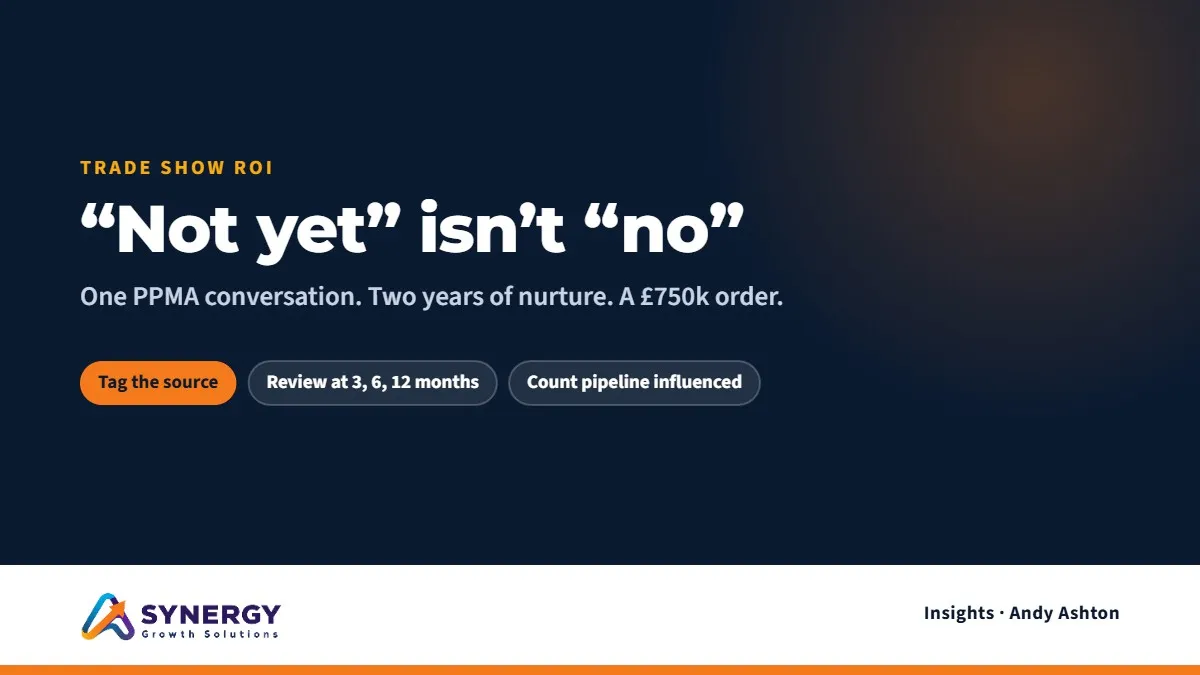
Not yet isn't no: measuring the real return on a trade show
Ask a business what a trade show cost and you'll usually get a figure within minutes. Stand. Build. Travel. Hotels. Staff days out of the business.
Ask what it returned and it goes quiet.
That's not because the show didn't work. It's because nobody tracked it long enough to find out.
Three months is too soon
Most show ROI is judged at around three months, when the pipeline is still forming. For technical products with long buying cycles, the real answer can take a year or more to arrive.
One of the best orders we won at Watson-Marlow started as a conversation at PPMA. It was worth £750k, and it took two years of continuous nurture, development and relationship building to land.
It was a one-off. Most enquiries from a show were worth £10k to £15k, and many never became orders at all. But if just ten of those enquiries turn into orders a year later, that's £100k to £150k that would otherwise have been written off.
Judged at three months, that £750k lead looked like a cost. Judged at two years, it paid for the show and then some.
Not yet isn't no
Back in the day, a lot of sales teams closed a lead if it hadn't bought within a few months. The thinking seemed reasonable. They'd tried. The prospect hadn't bought. Move on.
But most of those leads weren't saying no. They were saying not yet. The budget was set for next year. The project was waiting on a new line. The engineer we'd been talking to had to persuade someone else first.
Twelve months later, some of them are ready. By then, whoever kept in touch is the obvious call.
Keeping in touch, properly
Keeping in touch doesn't mean "just checking in". It means something useful every four to six weeks:
An application note for the problem they mentioned.
A short case study from a similar site.
An invitation to see something running.
A question about the project they were planning.
It doesn't need to be clever. It needs to be relevant, and it needs to happen without someone having to remember to do it.
Making it measurable
Three things turn a show from a gut feel into evidence:
Tag every lead with where it came from, and keep the tag when it becomes an opportunity.
Look again at three, six and twelve months, and keep looking after that.
Count the pipeline influenced, not just the orders placed directly.
Then, when someone asks whether to book the stand again next year, you're deciding with evidence rather than gut feel.
The question isn't whether your last show worked. It's whether your leads will be looked after long enough to find out.
If you'd like to know what your last show really returned, book a 30-minute Clarity Call.